What It Really Means to Be AI-Native
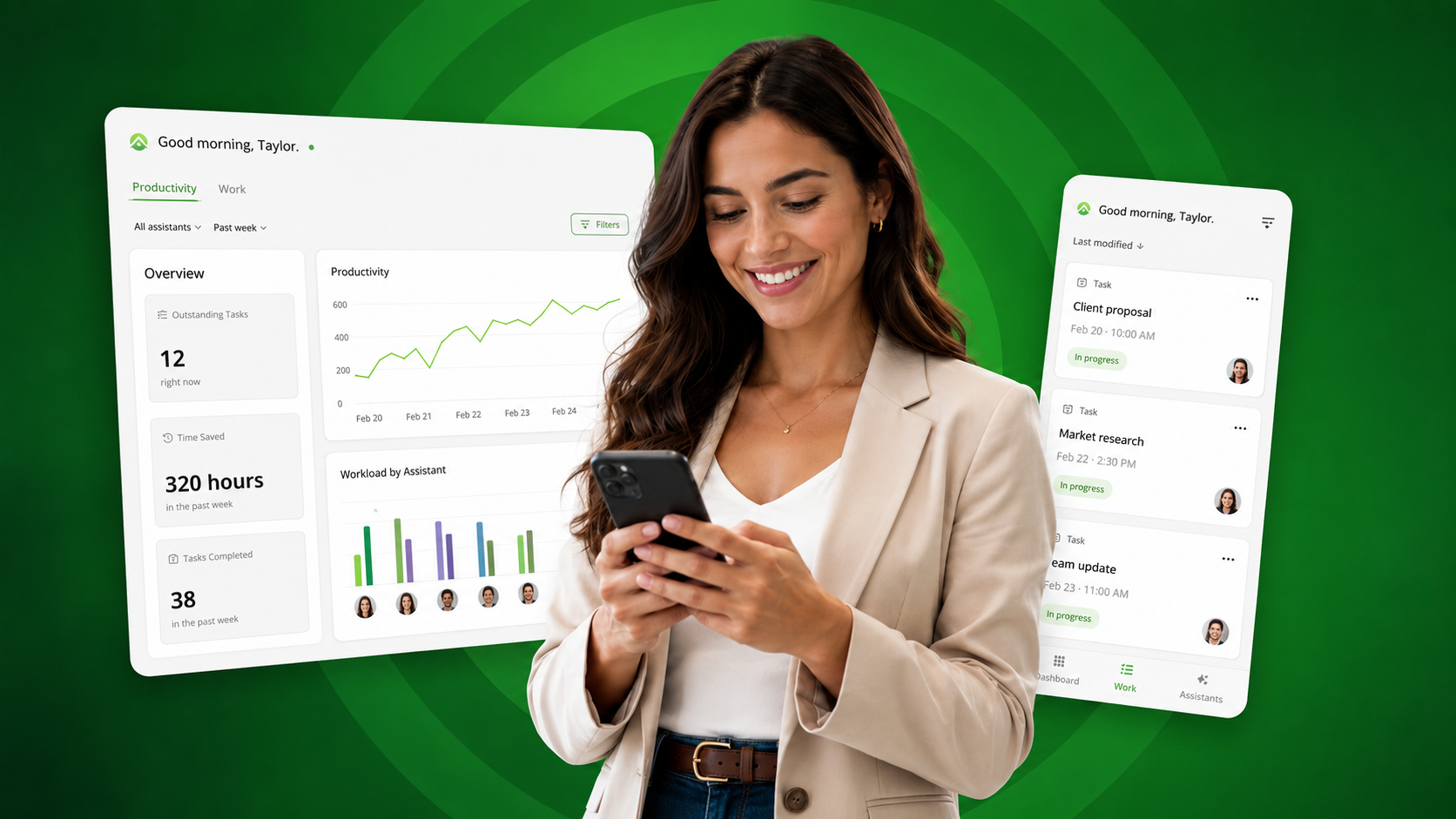
At CINC, AI-native isn’t a feature we added to the product. It’s the way we build — and great design is what makes it feel like one coherent experience for every community manager, accountant, and board member we serve.
Key takeaways
- AI-native is not a feature CINC added. It is how the company builds, and consistent design is what makes it feel like one coherent product across every role.
- The real unlock was structural: design, engineering, product, and AI agents now work from the same artifacts in the same repository, which is what lets the team move from idea to production in a day.
- AI introduces a new design responsibility. Clients need to know what the AI is suggesting, why, what will happen, and how to override it, and those patterns are built once and reused everywhere.
- Consistency should reduce the cost of learning, not enforce sameness. Navigation that reflects the client's work, not the company's org chart, is strategy made visible.
A customer promise that demands a different way of building
CINC’s promise to the community association management industry has always been direct: make the work less tedious and more meaningful. That’s easy to say. What’s harder is delivering it consistently — across accounting, resident communications, tasks, payments, and board reporting — in a product used daily by thousands of community managers, finance teams, and administrators.
For years, delivering on that promise meant shipping good features. Today, it means delivering a product where AI is not a tool someone uses occasionally — it’s a participant woven into every workflow, every decision surface, every daily task. And it means doing that in a way that clients actually trust.
That’s the challenge we set out to solve. Not with a single release, but with a fundamental rethinking of how we build.
When the product grows faster than the experience
CINC’s platform spans a lot of ground. As capabilities expanded over the years — more accounting depth, more communication tools, more workflow automation — the product accumulated the design debt that every growing platform eventually faces. Tables behaved differently across modules. Filters appeared in different places. Validation messages used different languages. Navigation reflected how the product was built internally, not how clients thought about their work.
None of this was careless. Teams were solving real problems. But without a shared design language, every team solved those problems independently. The cumulative effect was friction: more cognitive load for new users, less confidence for experienced ones, more debate and rework for internal teams trying to deliver improvements.
“Clients could feel the seams. The goal was to make CINC simple, intuitive, and trustworthy — not just give us a component library.”
Duri Chitayat, CTO
The answer wasn’t a broad redesign. A broad redesign would have been too large, too slow, and too abstract. Instead, we took a more disciplined path: start with two real client flows, build only the minimum design system needed to deliver them end-to-end, and prove value through actual usage before expanding.
That discipline shaped everything that followed.
Consistency where clients need confidence
We anchored the work in a few principles that aren’t just design philosophy — they’re commitments to the people who use Cephai every day.
01 Easy to start
New users shouldn’t need to understand CINC’s internal product structure to begin their work. Onboarding is a product experience — not just an implementation activity.
02 Easy to learn
Learning a pattern once in one part of Cephai should transfer everywhere. Consistency isn’t about visual sameness — it’s about reducing the cost of learning.
03 Easy to trust
When workflows are coherent and the system behaves predictably across roles and products, Cephai becomes more deeply embedded in the client’s operating rhythm.
04 Accessible by default
Accessibility can’t be a final polish step. It must be built into tokens, components, interaction rules, and quality checks from the beginning.
When design and code speak the same language
The most important structural change we made had nothing to do with visual design. It had to do with where the work lives.
Design, engineering, and product management used to operate in different tools with different vocabulary. Designers built screens. Engineers built features. Product managers wrote requirements. The hand-offs between them were real work — translation, interpretation, debate, rework. Every step in that chain was a tax on speed and accuracy.
We solved this by putting all the different aspects that engineers commit to every single day in the same git repository.
The result is a team that can move from idea to production in a day — not because engineers type faster, but because the organization is configured to move a decision from intent to delivery without translation loss. That’s an org capability you build deliberately. It depends on shared tools, shared patterns, shared review processes, and shared trust.
The design responsibility that AI introduces
AI-assisted workflows put a new demand on product design that most teams underestimate. It’s not enough to add an AI recommendation panel to a screen. Clients need to understand what AI is suggesting, why it’s suggesting it, what evidence supports it, what will happen if they approve it, and how to correct it when it’s wrong.
In the old workflow, building those patterns consistently across a platform like Cephai would have been a multi-quarter coordination effort. Different teams would improvise their own approval flows, their own confidence indicators, their own recovery patterns. Clients would have to learn a different AI interaction model in every corner of the product.
In the new workflow, those patterns are versioned artifacts — reviewed in the same place as everything else. When we improve a citation pattern, every place that uses it improves. Clients learn one pattern for “AI is suggesting something” and recognize it everywhere they work.
“AI-native doesn’t mean the product has AI in it. It means the artifacts the team produces — designs, components, patterns — are written in formats that AI agents can read and contribute to.”
Lessons that apply beyond CINC
The hand-off problem is an artifact problem, not a process problem
As long as design and engineering produce different artifacts in different formats, no amount of process can close the gap. The unlock is to reduce the number of artifacts and put everyone in front of the same one.
Information architecture is client strategy made visible
Navigation is one of the primary ways a product explains itself. When navigation reflects internal structure, clients feel the complexity of the company. When it reflects clients’ work, clients feel oriented.
Consistency should reduce client effort, not enforce sameness
The right consistency helps users learn once and apply that learning everywhere. The system should be consistent where clients need confidence and flexible where their work genuinely differs.
The system must be easier to use
A design system only works when teams adopt it. If it slows teams down, they’ll avoid it. If it helps them build better experiences faster, it becomes the default path — and quality scales with the team.
AI raises the bar for trust in every interaction
AI-native workflows introduce new design responsibilities. Clients need to understand suggestions, evidence, approvals, and recovery paths — and those patterns must be designed consistently from the start, not retrofitted later.
Two views of the same change
For clients, what’s visible is speed and consistency. New flows arrive faster. New AI capabilities feel familiar instead of foreign. Bugs and friction get fixed in days rather than quarters. The product feels alive in a way that mature software rarely does.
For the CINC team, what’s changed is more fundamental. Designers, engineers, product managers, and AI agents share a vocabulary, a workspace, and a review process. Decisions are made once and applied everywhere. New team members on-board against a system, not against tribal knowledge.
These aren’t separate stories. The client outcome is a direct result of the team’s operating model. We couldn’t deliver one without the other — and we built both at the same time.
Built for every community
Powered by one AI-native platform.
Less tedious. More meaningful. That’s the promise — and the design system, the toolchain, and the operating model are how we keep it.
Keep reading the AI-Native Series
• Building the AI-Native Stack — the technical companion to this piece: the shared toolchain, the design system layer by layer, and the AI interaction patterns.
• The Workflow Ceiling — the white paper on how AI resolves the decade-long tradeoff in community management platforms.
• Building the Operating System for Community Management — the strategy paper on AI built in, not bolted on.
Get a Demo